
The main cons of being a CNA are physical strain, emotional stress, modest pay, high injury rates, and limited advancement without further education. These drawbacks are real and worth understanding before you commit to the role.
As a CNA, you are the frontline caregiver, spending more time with residents than any other team member. That closeness brings rewards, but it also brings challenges that can lead to burnout if you are unprepared. This guide breaks down the downsides honestly so you can weigh them against the benefits.
At a Glance: The Main Drawbacks
- Physical strain: Repetitive lifting and transferring cause back, shoulder, and foot injuries.
- Emotional load: Constant exposure to illness, death, and family conflict.
- Modest pay: Median wages near $35,000, often with few benefits.
- High turnover: Chronic understaffing pushes many aides out within a year.
- Limited advancement: Growth usually requires additional schooling.
Physical Demands: The Body Takes a Beating
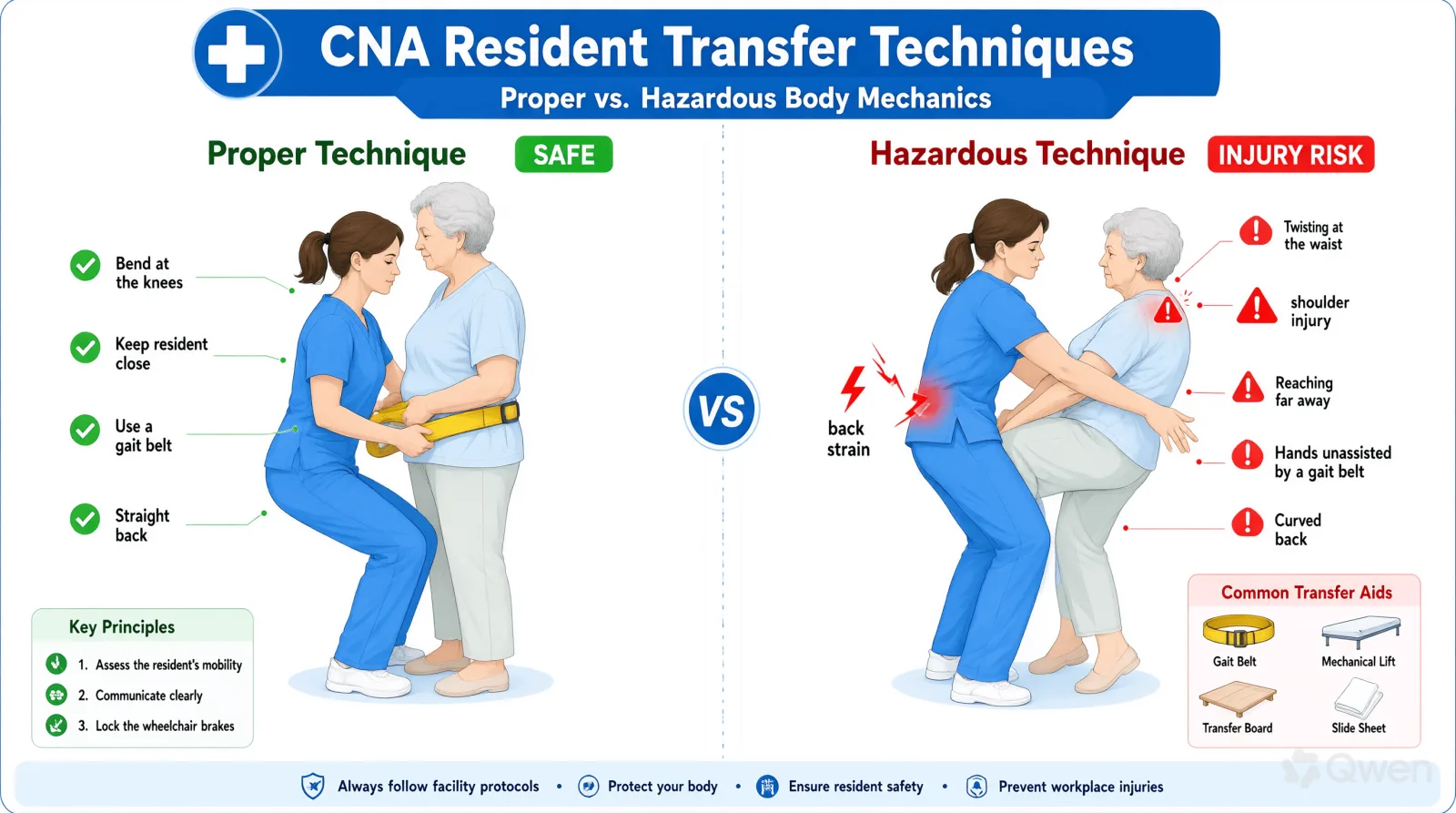
CNAs spend most of their shift on their feet, and the job requires frequent lifting, transferring, and repositioning of residents. According to the Bureau of Labor Statistics, nursing assistants have one of the highest rates of musculoskeletal injuries among healthcare workers. Back strain, shoulder injuries, and foot problems are common. Even with proper body mechanics and lift equipment, the physical toll accumulates over time. Many CNAs work 8- or 12-hour shifts with few breaks, and staffing shortages can mean you are doing the work of two people. If you have a pre-existing injury or condition, this is a critical consideration.
Why Injuries Happen So Often
Most injuries occur during transfers, when a resident suddenly bears weight, loses balance, or grabs the aide. A resident who is confused may resist or pull away mid-transfer, forcing the CNA to catch them. This is why your skills training emphasizes locking the bed, lowering the rail, and using a gait belt. If you want to see how examiners score these safety steps, review the CNA mobility skill questions.
Emotional and Mental Stress
Caring for people who are ill, in pain, or dying is emotionally draining. You will form bonds with residents and their families, and you will experience loss. The constant exposure to suffering, combined with the pressure to meet everyone's needs, can lead to compassion fatigue and burnout. Additionally, CNAs often face verbal abuse or aggression from residents with dementia or mental health conditions. You must learn to manage your own emotions while maintaining professionalism. The CDC notes that healthcare workers face high levels of stress, which can affect mental health and job satisfaction.
Compassion Fatigue Versus Burnout
Compassion fatigue is the gradual loss of empathy after repeated exposure to suffering. Burnout is broader exhaustion from chronic workplace stress, including understaffing and administrative pressure. Both are common in long-term care. Warning signs include dreading shifts, snapping at coworkers, and feeling numb toward residents. If those signs appear, report your workload to your charge nurse rather than absorbing it silently.
Low Pay Relative to the Work
Despite the demanding nature of the job, CNA wages are modest. The median annual salary for nursing assistants was around $35,000 in 2023, with wide variation by state and setting. For many, this is barely above a living wage, especially in high-cost areas. Overtime and shift differentials can boost income, but the base pay often does not reflect the physical and emotional labor required. If financial security is a top priority, you should consider whether the pay meets your needs or if you plan to use the CNA role as a stepping stone. For a realistic breakdown of earnings, see how much a CNA makes and the benefits explained.
High Risk of Burnout and Turnover
Staffing shortages are chronic in long-term care, and CNAs often bear the brunt. Understaffing leads to rushed care, missed breaks, and feeling overwhelmed. This environment contributes to high turnover rates—many CNAs leave the field within a year. Burnout not only affects your well-being but also the quality of care you provide. Recognizing the signs early and having coping strategies is essential. For tips on managing stress, see our guide on how to pass the CNA exam on the first try, which includes stress management techniques that apply on the job.
Limited Career Advancement Without Further Education
Being a CNA is often an entry-level position. Advancement typically requires additional certifications or degrees, such as LPN/LVN or RN. Without further education, your role and pay may plateau. Some CNAs move into specialized roles like restorative aide or medication aide, but these still require extra training. If you aspire to higher-earning positions, you must plan for continuing education. Our article on CNA scope of practice explains the boundaries and opportunities for growth.
Exposure to Health Risks
CNAs work in environments where infectious diseases are present. You are at risk of exposure to pathogens like MRSA, C. diff, and respiratory viruses. Proper use of personal protective equipment (PPE) and infection control protocols is critical, but the risk is never zero. Additionally, you may encounter hazardous chemicals, needlestick injuries, and violence. Following safety guidelines, such as those outlined in our OSHA for CNAs guide, can reduce but not eliminate these risks.
Everyday Infection Control Habits That Protect You
Most exposures are preventable with consistent habits. Keep hand hygiene supplies within reach, remove gloves before touching shared surfaces, and never recap a needle if one is left in a resident's room. Report any bloodborne exposure immediately, because post-exposure protocols are time sensitive. Understanding how germs spread helps you anticipate risk before it happens; our guide on modes of transmission covers the chain of infection in plain language.
A Day in the Life: Weighing the Cons
Consider a typical shift: You arrive at 6:30 AM, receive report, and immediately start waking residents for breakfast. You assist with toileting, dressing, and feeding. By 9 AM, you have already lifted and transferred multiple residents, some of whom are heavy or combative. You skip your break because another CNA called out. At lunch, you rush through your own meal to help feed others. By the end of your 12-hour shift, your back aches, your feet throb, and you feel emotionally drained. This is the reality for many CNAs.
How the Cons Compare Across Work Settings
The drawbacks shift depending on where you work. Use this comparison to match a setting to your tolerance for each con.
| Setting | Physical Load | Emotional Load | Typical Pay |
|---|---|---|---|
| Nursing home | High (heavy lifting, many total-care residents) | High (long-term bonds, frequent deaths) | Modest, often with shift differentials |
| Hospital | Moderate to high (fast pace, more walking) | Moderate (shorter stays, less attachment) | Generally higher than long-term care |
| Home health | Variable (one client, less equipment) | Moderate (isolation, family dynamics) | Varies; mileage may or may not be paid |
| Assisted living | Lower (more independent residents) | Moderate | Often lower than hospital |
Hospital aides see fewer chronic deaths but handle more acute events and faster turnover. Home health aides avoid the understaffing chaos of a unit but may work alone without a colleague to help lift. There is no setting without a con, only a different mix.
Is the CNA Role Right for You?
Despite the cons, many CNAs find the work deeply meaningful. The relationships with residents and the knowledge that you make a difference can outweigh the drawbacks. Before deciding, consider your physical health, financial needs, and emotional resilience. If you are unsure, try volunteering or working as a home health aide to test the waters. For a balanced view, explore the pros and cons through practice questions that test your understanding of the role. Our Role of the Nurse Aide Questions can help you assess your readiness and expectations.
Practice questions
Tap or click a card to flip and see the answer with clinical rationale.
Sample Question 1
A nurse aide is transferring a resident who suddenly becomes weak and begins to fall. What should the aide do first?
- A. Catch the resident and hold them upright
- B. Lower the resident gently to the floor while protecting the head
- C. Pull the resident back into the chair by the arms
- D. Call for help and wait without moving
Tap to reveal answer
Answer & Rationale
Lowering the resident to the floor protects both of you and prevents a back injury from an uncontrolled catch. Catching a falling adult is a leading cause of CNA injury.
Tap to return to question
Sample Question 2
Which action best reduces the risk of musculoskeletal injury during a transfer?
- A. Twisting at the waist to reach the gait belt
- B. Holding the resident close to your body and bending your knees
- C. Lifting with your back muscles while keeping legs straight
- D. Rushing to finish before the resident becomes tired
Tap to reveal answer
Answer & Rationale
Keeping the resident close shortens the lever arm, and bending the knees uses stronger leg muscles instead of the spine.
Tap to return to question
Sample Question 3
A CNA feels persistently exhausted, dreads shifts, and has lost patience with residents. What is the most appropriate first step?
- A. Ignore it; these feelings are normal and pass
- B. Report the situation to the charge nurse and seek support
- C. Quit without notice to avoid conflict
- D. Take on extra shifts to prove resilience
Tap to reveal answer
Answer & Rationale
These are signs of burnout. Reporting to a supervisor and using employee assistance resources are appropriate, while ignoring symptoms or adding shifts worsens the problem.
Tap to return to question
Frequently asked questions
What is the biggest con of being a CNA?
Many CNAs cite physical exhaustion and low pay as the most significant drawbacks. The combination of heavy lifting and modest wages can be discouraging.
Do CNAs get injured often?
Yes, musculoskeletal injuries are common due to repetitive lifting and transferring. Proper training and equipment can reduce risk.
Can you live comfortably on a CNA salary?
It depends on your location and lifestyle. In some areas, a CNA salary may be enough for basic expenses, but it is often tight. Many CNAs work overtime or have a second job.